Portrait Project

For this portrait series, I focused on using lighting, composition, and depth of field to create mood and highlight the subject. A shallow depth of field was used to separate the subject from the background while still keeping enough detail for context. Natural and available lighting helped create soft shadows and a balanced tone.
Quiet Reflection

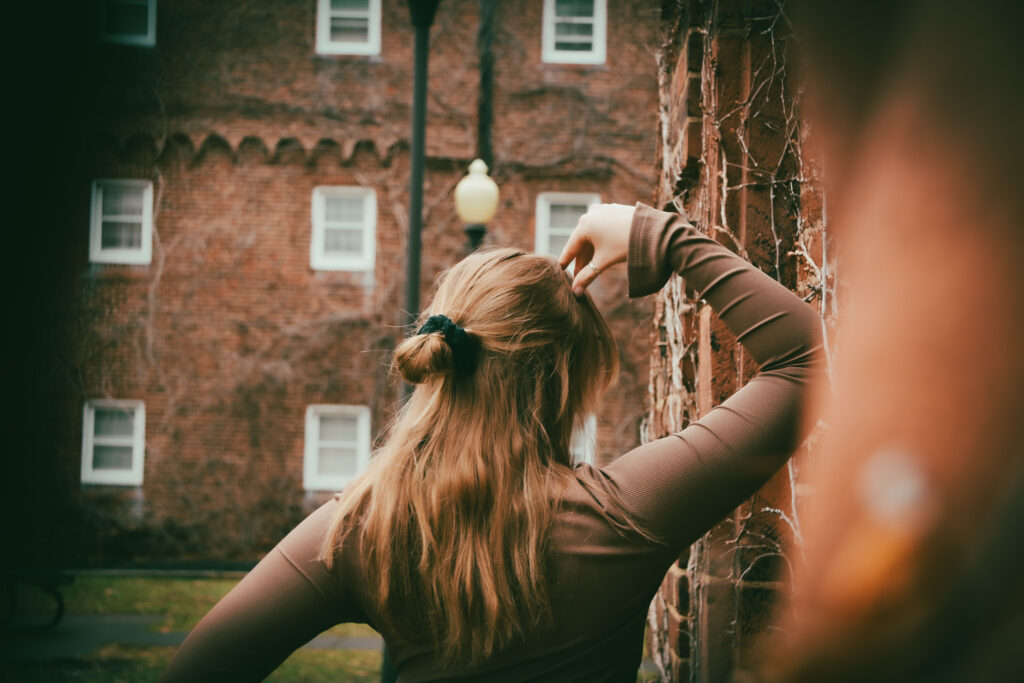
A thoughtful moment of my sister, captured naturally as she pauses within her own space. The soft framing and surrounding textures help create a sense of calm, allowing the viewer to feel the stillness and introspection of the moment.
Quiet Strength

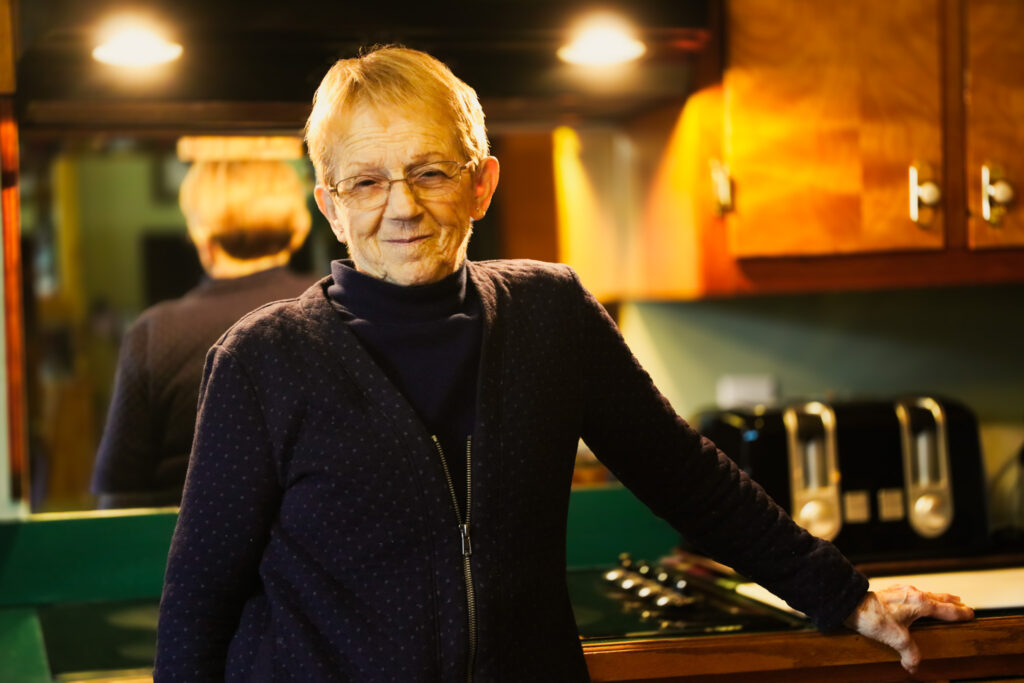
A portrait that reflects both warmth and resilience, where subtle expression and soft lighting come together to highlight character. The quiet setting allows her presence to stand out, showing strength in a calm and natural way.
A Touch of Snow

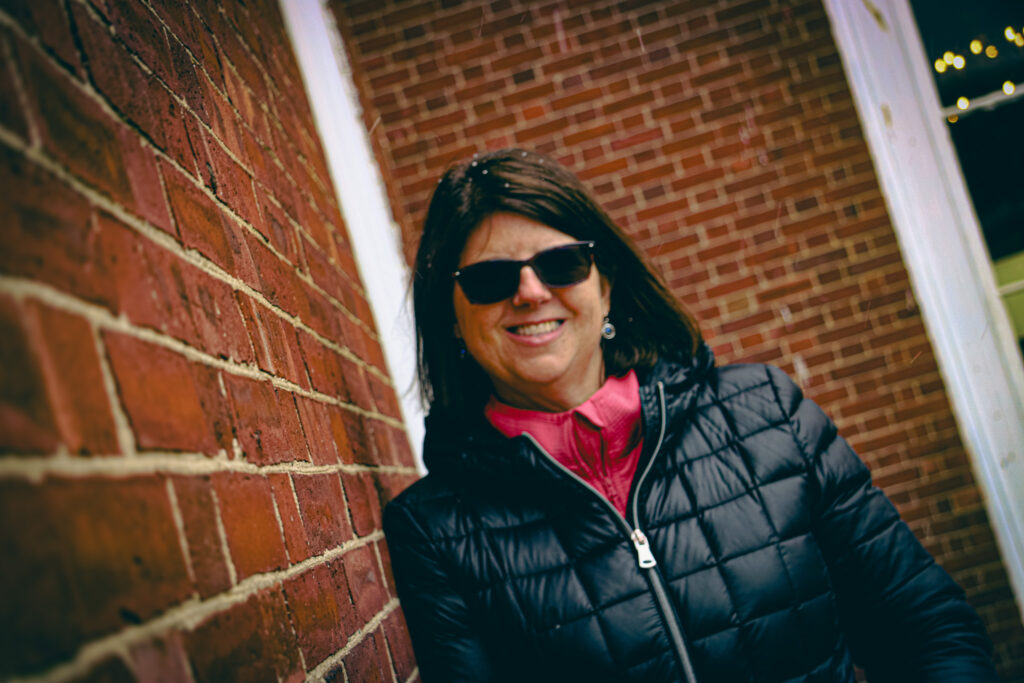
Light snow gently falls as she stands against the brick wall, with small flakes catching in her hair. The subtle details of winter add texture and atmosphere, turning a simple moment into something quietly memorable.

I also used environmental elements to enhance each image. The snowfall in A Touch of Snow adds texture and atmosphere, while the indoor setting in Quiet Strength creates warmth. In Quiet Reflection, the subject is turned away, creating a more thoughtful and introspective mood.

Overall, I used composition, lighting, and environment to capture natural moments while adding depth and emotion to each portrait.
Landscape Final

For this landscape assignment, I focused on how compositional space works through the rule of thirds, the golden ratio, and the use of foreground, mid-ground, and background to create depth.

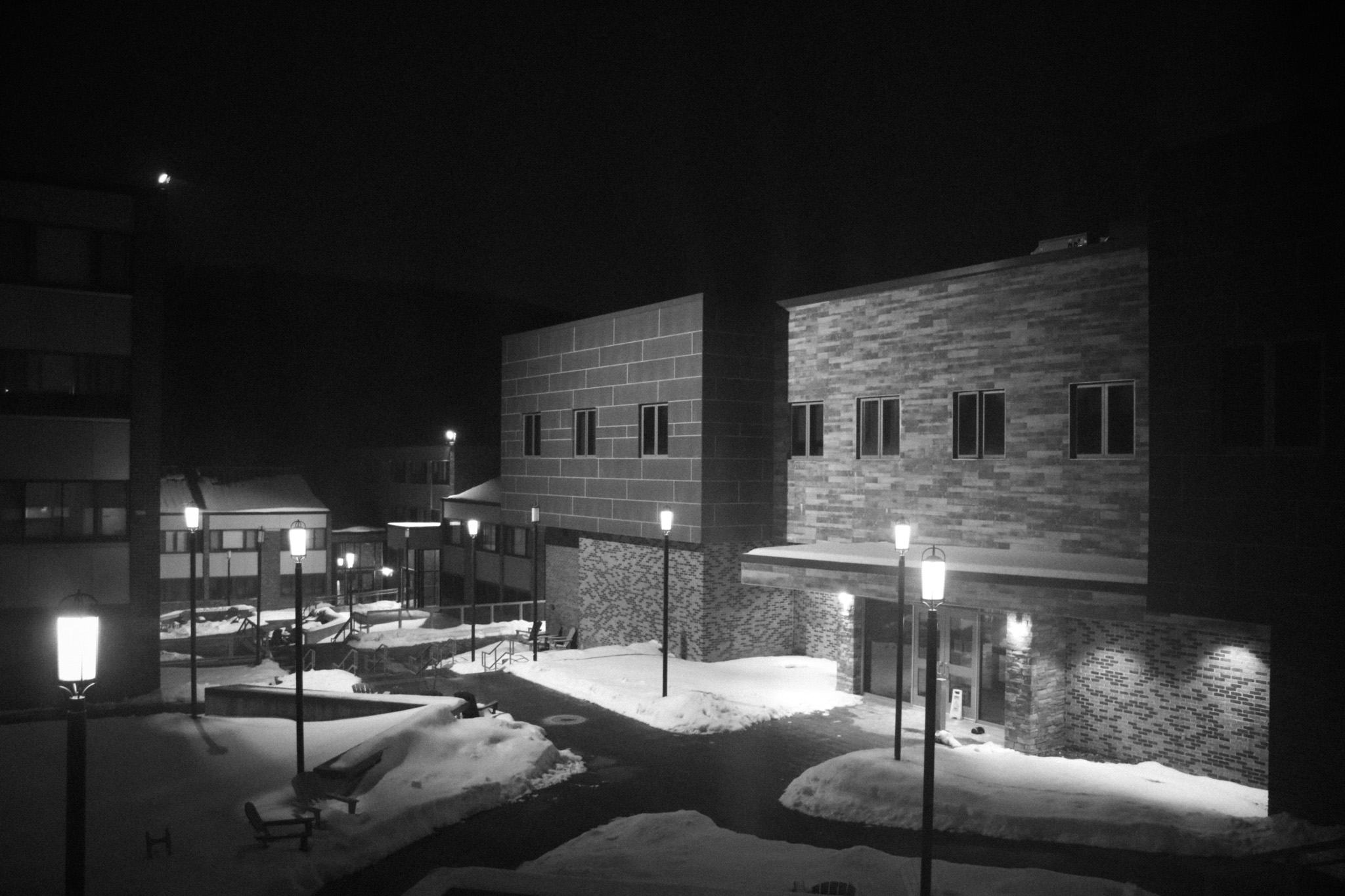
In the first image, the rule of thirds is visible in how the main building sits slightly off center rather than directly in the middle of the frame. The lampposts act as vertical elements that guide the viewer’s eye into the scene. The foreground consists of the snow and benches, the mid-ground includes the walkway and building entrance, and the background fades into the darker surrounding buildings and sky. This layering creates depth, especially with the contrast between light and shadow. The glowing streetlights also help establish a natural visual flow, similar to a subtle golden ratio curve, guiding the eye from the lower left corner toward the lit building

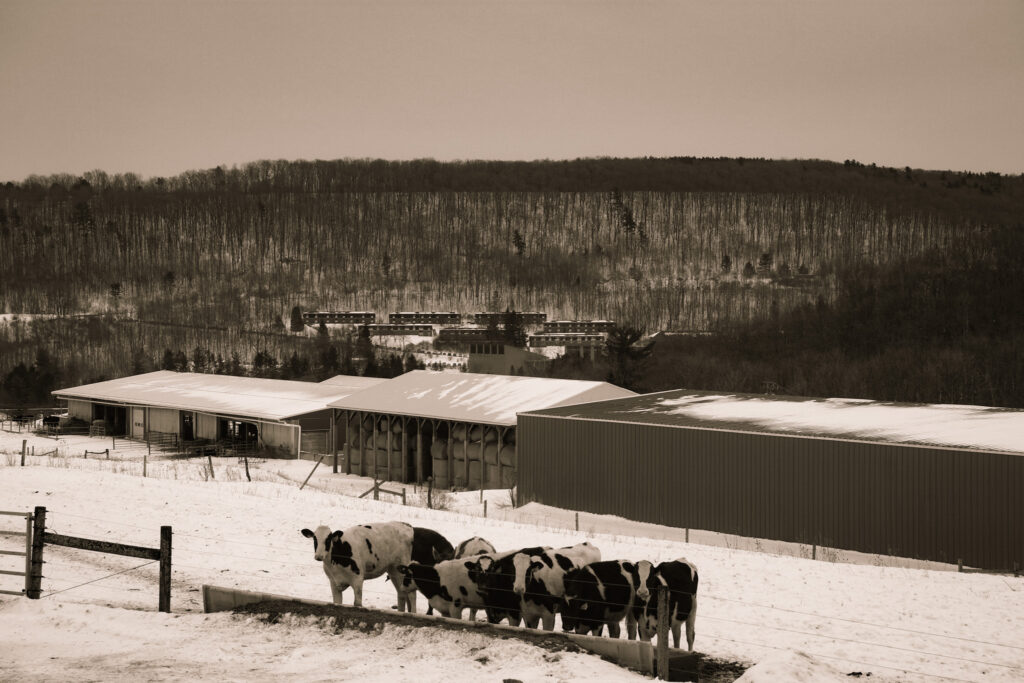
In this final image, the cows are placed along the lower third of the frame, reinforcing the rule of thirds. The fence line creates a horizontal visual anchor, while the barn structures and hillside help balance the upper portions of the image. The foreground is clearly defined by the cows and fence, the mid-ground includes the barns and open snowy field, and the background consists of the wooded hillside. This separation gives the image strong depth and spatial awareness. The gentle slope of the land and the placement of buildings create a natural visual rhythm that echoes the golden ratio by subtly guiding the eye across the scene.

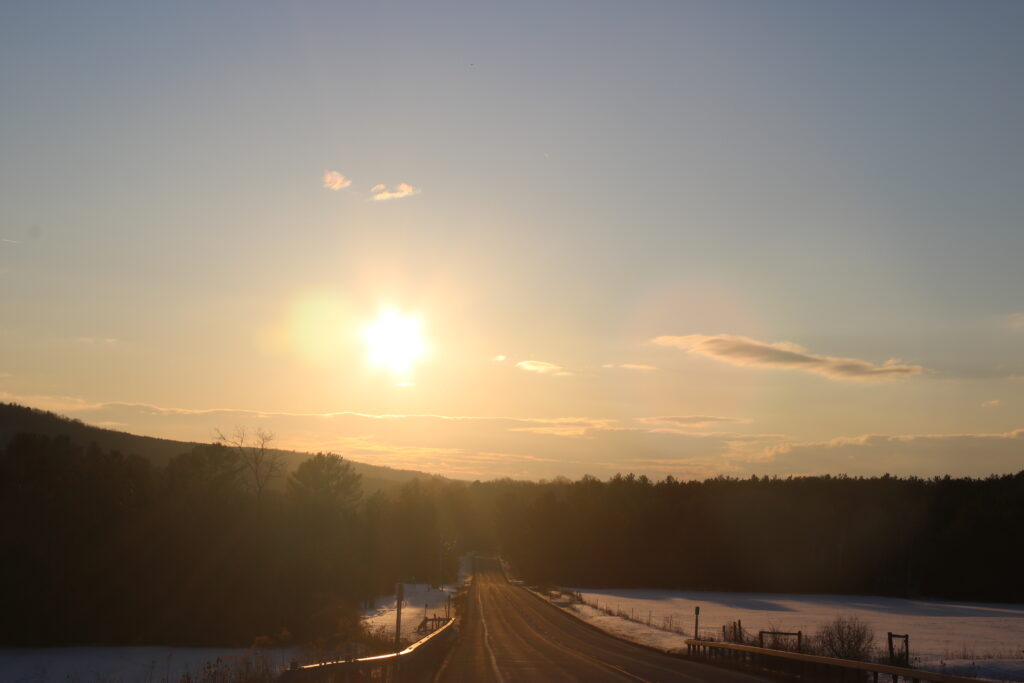
This image strongly demonstrates the rule of thirds. The horizon line sits close to the lower third of the frame, allowing the sky to dominate the composition. The sun is positioned slightly off center, creating balance without making the image feel static. The road works as a leading line, pulling the viewer’s eye directly into the distance, which supports a golden ratio style curve as it gradually narrows into the background. In terms of depth, the guardrails and snowbanks serve as the foreground, the road and tree line create the mid-ground, and the sky and distant hills form the background. This layering enhances the sense of space and perspective.

Overall, each image demonstrates intentional use of compositional space through balance, leading lines, and layered depth.